Program Management
Government Innovation Platform: What Public Programs Need
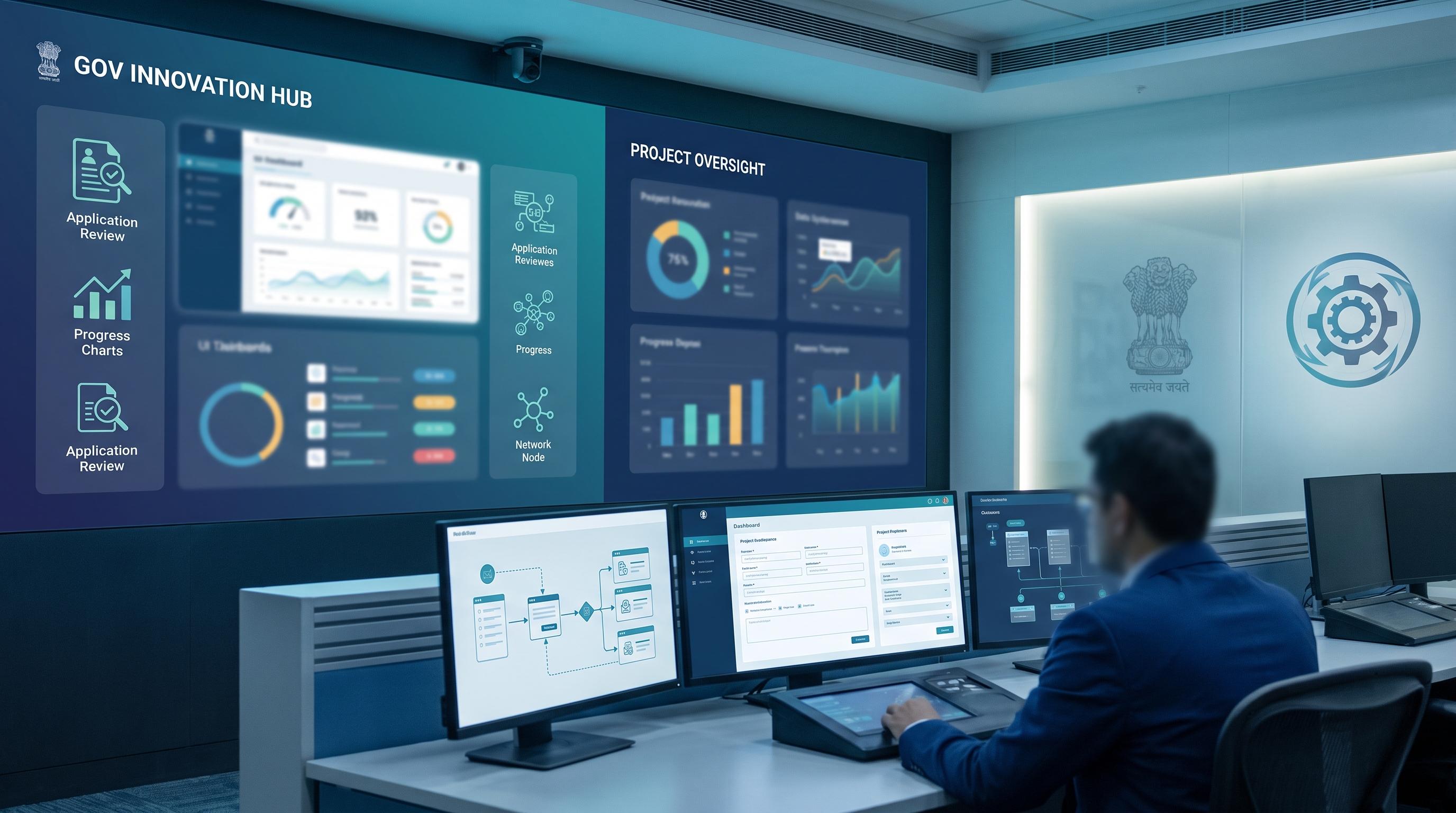
Government innovation programs need a different operating model
Government innovation programs need more than forms and workflow automation. They need a government innovation platform that helps teams run fair reviews, track decisions, coordinate stakeholders, and produce reporting that stands up to scrutiny. That is why public-sector teams outgrow generic tools faster than many private teams do.
A patchwork process may frustrate a private team. For a public program, it can create a governance risk. Applications may sit in one place. Evaluator comments may sit in another. Committee decisions may live in email threads. Reports may be built by hand. The problem is not just inefficiency. It is the loss of transparency, accountability, and confidence.
If a government department, mission office, incubator network, or challenge-based innovation initiative is evaluating a platform, the right question is not whether the software can collect submissions. The real question is whether it can support the full operating requirements of a public innovation program.
TL;DR: A government innovation platform must do more than collect applications. It should help public teams run reviews, track milestones, coordinate stakeholders, and produce clear reporting with defensible oversight. If the team still has to rebuild decisions and reports by hand, the system is not solving the main problem.
Why government innovation platforms matter more as programs grow
Government innovation programs outgrow generic tools when complexity becomes normal. A single intake form may be enough for a small pilot. Most public programs do not stay that simple for long. They often involve multiple stages, multiple reviewers, multiple institutions, and recurring reporting duties.
Application and eligibility screening may need to be separated from technical review, committee scoring, and final approvals.
Different stakeholders may need different levels of visibility, from internal operators to evaluators, partner organizations, and senior oversight teams.
Programs may run across sectors, schemes, geographies, or cohorts with different criteria and timelines.
Progress tracking may extend far beyond selection into milestones, disbursement logic, reporting, and outcome measurement.
Leadership may need recurring updates that are standardized enough to compare across programs, partners, or time periods.
A generic system can store tasks and submissions, but it often struggles to reflect how public programs are actually governed. Once a team starts rebuilding oversight manually outside the platform, the platform is no longer doing the core job.
The core jobs a government innovation platform should handle
A government innovation platform should centralize the operational work and the oversight work together. Public teams need one connected environment where program delivery, decision processes, and reporting can be managed without constant reconciliation.
1. Intake and application tracking
Application intake should do more than capture basic data. It should support structured eligibility checks, stage movement, reviewer assignment, document collection, and clear status visibility for operators and applicants. Public programs need this because application flow is often the first place where process inconsistency starts to show.
2. Challenge and scheme management
Many public innovation teams do not run one simple program. They run multiple schemes, challenges, cohorts, departments, or partner-led tracks at the same time. The platform should let the team manage each one clearly while still comparing performance, progress, and outputs across the full portfolio.
3. Evaluator and committee workflows
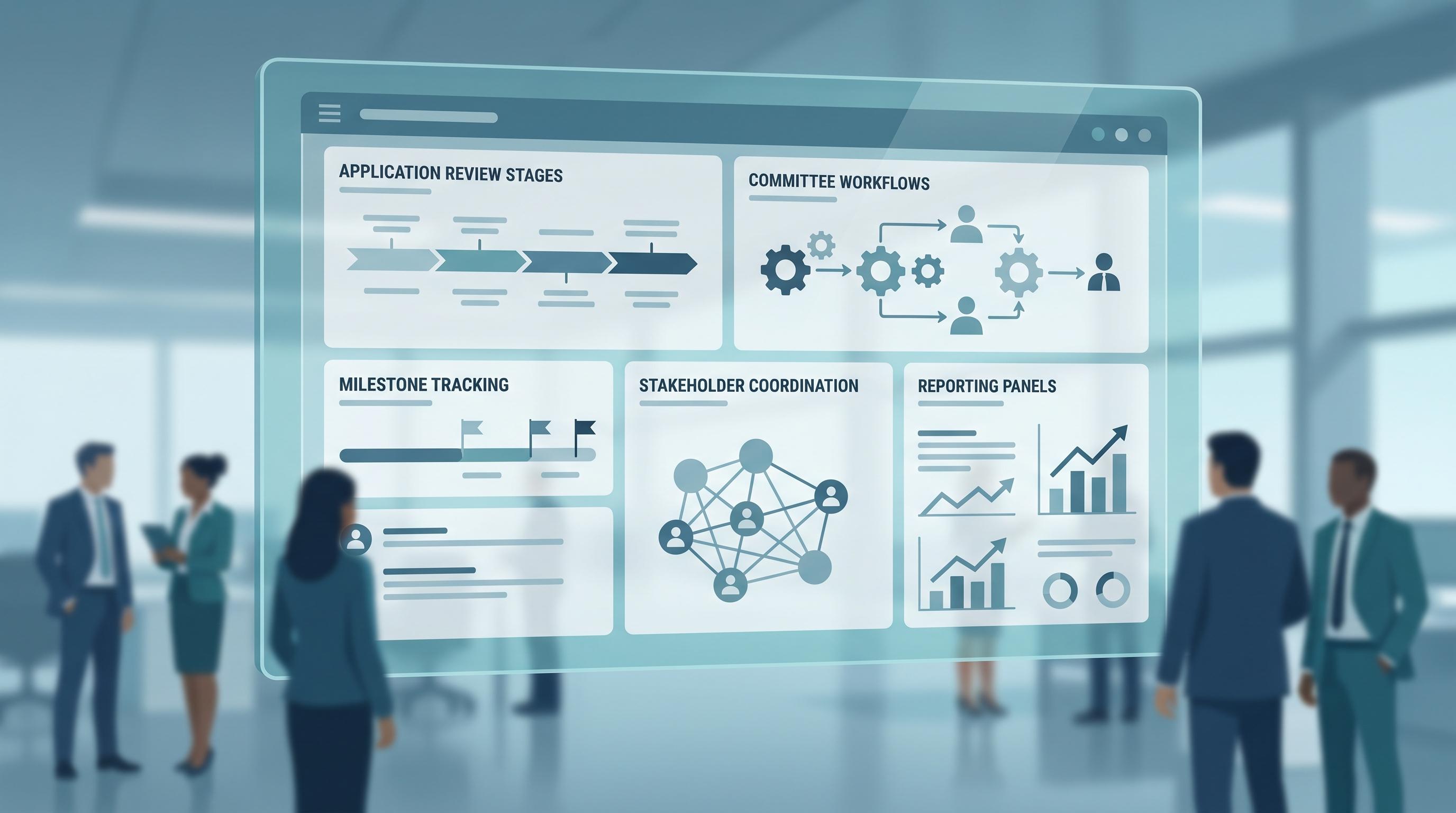
Evaluator workflows should be clear, role-based, and easy to review later. Scorecards, comments, committee stages, and decisions should stay attached to the right application at every step. A public team should not have to piece together how a decision was made from scattered files and messages.
4. Milestone and outcome tracking
Selection is only the beginning. Public programs often need to track milestones, deliverables, startup progress, grant-linked checkpoints, mentor engagement, or ecosystem outcomes over time. The platform should support structured updates rather than free-form reporting that becomes impossible to compare.
5. Reporting and audit readiness
Reporting should not turn into a monthly spreadsheet exercise. A strong platform should show application volume, decisions, milestones, stakeholder activity, and program progress in one place. That makes reports faster to prepare and easier to trust.
Why governance and transparency matter as much as automation
Governance matters because public programs answer to more than the delivery team. They answer to departments, partner institutions, reviewers, funders, auditors, and sometimes public scrutiny. That is why governance and transparency matter as much as workflow speed.
Automation is valuable, but automation without transparency can create faster confusion. A government innovation platform should help teams answer questions such as these with confidence:
Who reviewed this application, and against what criteria?
Where is this startup or project in the program lifecycle right now?
Which partners or committees were involved in this decision?
How are milestones being tracked across multiple programs?
Can the team produce consistent reports without rebuilding the story by hand?
These are governance questions, not only workflow questions. When a platform supports them well, public teams gain defensible decision-making, better visibility into progress, clearer accountability across partners, and more reliable reporting.
What public-sector buyers should compare in a platform
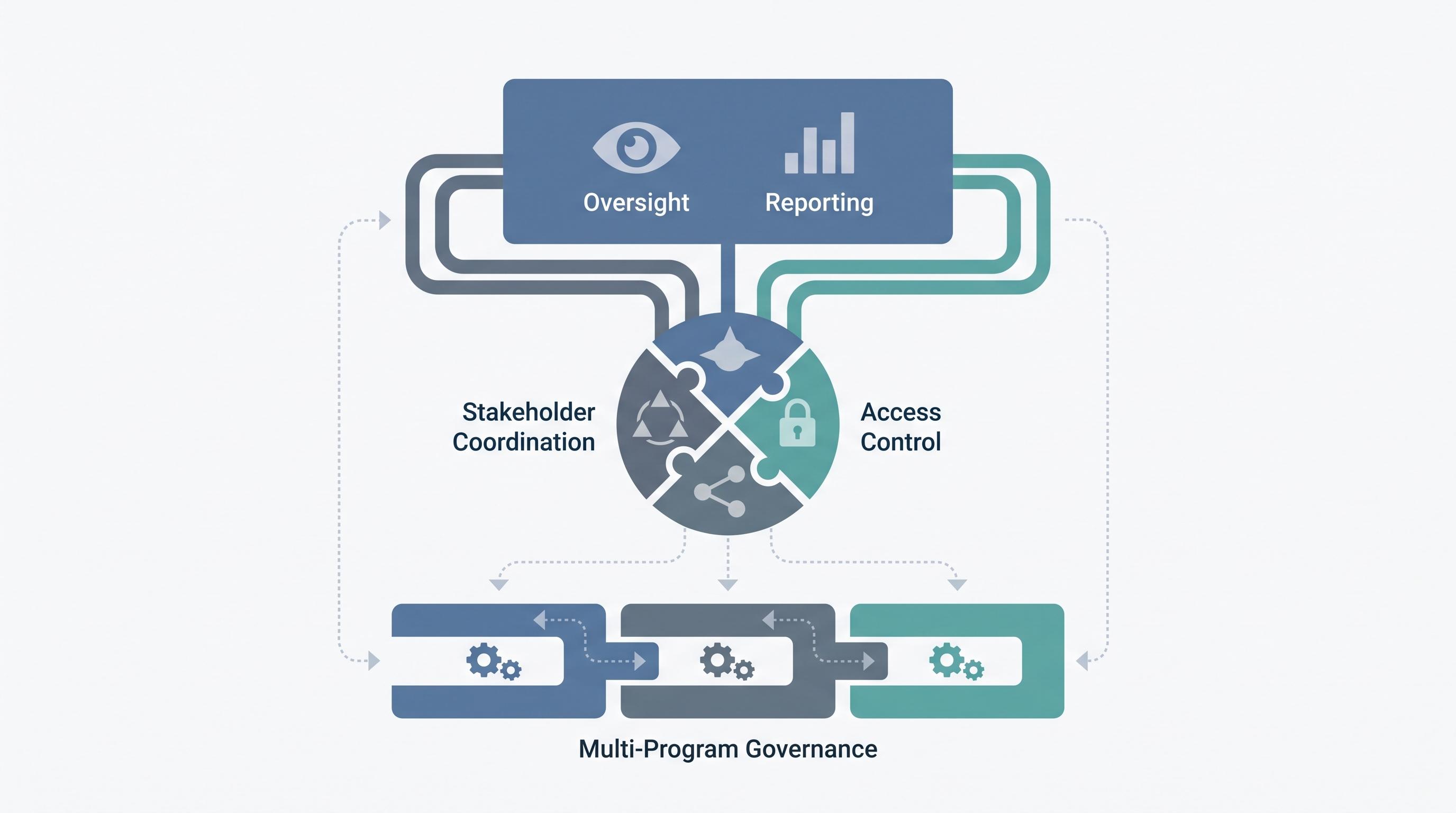
Public-sector buyers should compare platforms against real operating needs, not just a long feature list. The right public sector innovation platform should support oversight, reporting, and multi-stakeholder coordination without forcing the team back into manual workarounds.
What to compare | What strong support looks like |
|---|---|
Access control | Different roles for operators, reviewers, committees, partners, and oversight stakeholders without exposing everything to everyone. |
Reporting depth | Program, application, milestone, and stakeholder reporting that can be reused across review cycles and leadership updates. |
Multi-program flexibility | Support for multiple schemes, cohorts, partner-led initiatives, or hub-and-spoke structures inside one platform. |
Deployment and trust readiness | Clarity on security, compliance, hosting, and how the platform fits institutional procurement and governance expectations. |
Stakeholder coordination | Support for internal teams, evaluators, startups, incubators, ecosystem partners, and committees in one connected operating environment. |
The buying decision becomes much clearer when the platform is evaluated against public-program realities: transparency, standardization, oversight, and reporting under institutional pressure.
A practical checklist for public-sector evaluation
Public-sector buyers often benefit from a simple checklist when comparing options. If a platform cannot support most of the points below without significant manual work outside the system, it is likely the wrong fit for a government innovation program.
Can it manage multi-stage application review and committee workflows?
Can it support more than one program, scheme, or challenge at the same time?
Can different stakeholders see what they need without creating visibility risks?
Can milestones, progress updates, and outcomes be tracked in a structured way?
Can reports be generated consistently across cycles, programs, or partners?
Can the team explain how decisions were made without relying on manual reconstruction?
Can the platform support institutional expectations around trust, accountability, and long-term program operations?
This kind of checklist is useful because it shifts the conversation from software features to operating capability.
Where SanchiAPP fits
SanchiAPP is positioned for innovation ecosystems that need structured operations across applications, programs, stakeholders, reporting, and governance in one platform. That makes it relevant for public-sector teams that need more than a form tool and more than a generic internal workflow layer.
Your existing positioning already supports this message: application and evaluation management, real-time tracking, reporting, stakeholder coordination, multi-program operations, and institutional deployment flexibility. Readers who want a broader comparison can review the features overview, read Program Management Platform vs Spreadsheets, explore Spreadsheet Soup to System, or compare buyer criteria in Incubator Management Software: Buyer’s Guide for 2026.
Your existing materials also include a useful proof point. One national startup program used SanchiAPP to collect missing information from more than 1,200 applicants without slowing the evaluation process. That example stays on-topic because it shows how a connected platform supports continuity, follow-up, and reporting discipline at public-program scale.
The right tone here is not product hype. It is institutional fit. Public-sector buyers want to know that the platform can support transparency, accountability, structured delivery, and credible reporting across many moving parts. That is the frame where SanchiAPP is strongest.
Final takeaway
Government innovation programs do not just need software that captures applications. They need a management platform that can hold together intake, review, coordination, oversight, reporting, and governance without forcing the team back into manual reconciliation.
That is the difference between a tool that digitizes one step and a platform that supports the full operating model of a public innovation program. For institutional buyers, that difference matters because delivery quality and governance quality are inseparable.
If this matches the pressure your team is under, review how SanchiAPP supports reporting, governance, and multi-stakeholder innovation programs on the features page and compare it against your current operating model.
A government innovation platform should support both program delivery and oversight.
Public programs outgrow generic tools when reviews, reporting, and stakeholder coordination become harder to manage.
The strongest platforms make decisions, milestones, and reporting easier to trace and explain.
Buyers should compare operating fit, not just feature count.
If teams still rebuild reports and decisions by hand, the platform is not solving the core problem.
Key takeaways
FAQ
A government innovation platform is a system that helps public-sector teams run innovation programs, startup challenges, grant-linked initiatives, or ecosystem schemes with structured workflows for applications, reviews, reporting, stakeholder coordination, and oversight.
Public sector innovation software should include intake and eligibility workflows, evaluator and committee management, milestone tracking, standardized reporting, stakeholder coordination, and strong support for transparency and accountability across the full program lifecycle.
Government startup programs improve reporting when application data, decisions, milestones, and stakeholder activity are managed in one connected system. That reduces manual reconciliation and makes recurring reports more consistent and defensible.
Innovation programs become more audit-ready when decision criteria, workflow stages, stakeholder roles, milestones, and reporting are structured clearly enough that the team can explain what happened, when it happened, and how decisions were made.
 Made with Levo